Who Are Narcissists and What Lies Behind Their Mask
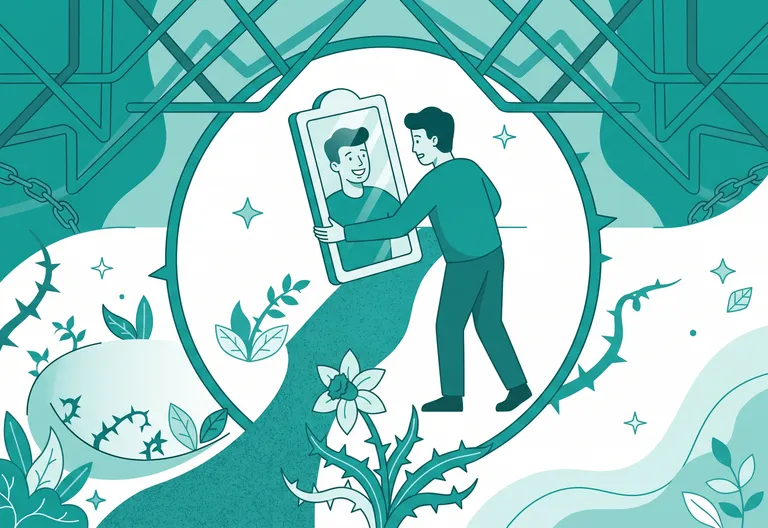
Today, the word "narcissist" is frequently tossed around to describe anyone who seems overly confident, egocentric, or highly ambitious. Or conversely, to describe someone who deeply hurt us by acting solely in their own self-interest.
But what does narcissism actually mean in psychology? How do you recognize someone with Narcissistic Personality Disorder, and is it possible to build a fulfilling relationship with them? In this article, experts from the nəoldu platform dive into the true nature of this phenomenon.
Understanding Narcissism: The Line Between Normal and Pathological
Narcissistic Personality Disorder (NPD) is a mental health condition characterized by an excessive fixation on oneself and one's achievements. Individuals with this condition have an acute need for constant admiration and attention from others, are prone to manipulation, and face significant challenges in experiencing empathy.
However, it is crucial to distinguish between:
- Narcissistic traits within the normal range. These are specific character accents present in many individuals. They can often drive success in career, business, or creative endeavors.
- Pathological disorder. This represents a deep, pervasive distortion of the personality structure, which can only be diagnosed by a qualified mental health specialist.
A Brief History: From Egoscentrism to a Clinical Diagnosis
A half-century ago, individuals exhibiting these traits were simply labeled as selfish or self-absorbed. However, at the turn of the 20th century, psychoanalysts (including Sigmund Freud) noticed that these behaviors aligned with a distinct clinical pattern.
Over time, the concept evolved, and by the 1980s, narcissism was formally integrated into international manuals of psychiatric disorders as an independent diagnosis.
Key Symptoms of Narcissism
According to established psychological standards, prominent narcissism is often identified by the following signs:
- A grandiose sense of self-importance and preoccupation with fantasies of boundless success, power, or beauty;
- A sincere belief in one's own uniqueness and an entitlement to special treatment;
- An intense, constant craving for praise and validation from others;
- An exploitative attitude toward people, using them to achieve personal goals;
- A deficiency or complete lack of the capacity to empathize with others;
- Pervasive envy of others' success, often masked by arrogant and haughty behavior.
The Narcissistic Spectrum: Different Forms and Expressions
Psychologists suggest viewing narcissism as a spectrum. On one end are individuals with mild traits that intensify primarily under stress. On the opposite end lies "malignant" narcissism.
The fundamental difference between the disorder and normal traits is that pathological features permeate every single area of a person's life, persist over time, and critically disrupt the ability to form healthy personal or professional relationships.
Yet regardless of where they fall on the spectrum, all narcissistic individuals share a profound internal drama: a deep-seated feeling that they are unloved and unlovable. There is a massive emotional black hole within their psyche that they desperately try to fill with external tokens of success, status, or the adoration of their partners. But it cannot be filled from the outside.
Root Causes: Why the False Self Overtakes the True Self
Experts generally agree that narcissism develops through a combination of genetic factors and specific childhood upbringing environments. Psychoanalysis highlights two primary scenarios:
- The Idolized Child. The family places the child on a pedestal, constantly praising them as "the best and most special." At this moment, the child's psyche picks up a precarious signal: “I am not loved for who I am, but for the perfect role I have been assigned to play.” To secure parental love, the child begins to suppress their authentic, living desires, replacing them with an idealized image.
- Conditional Love. Parents offer praise and affection only when the child meets their expectations. This creates chronic tension. The child stops expressing their true self and molds their behavior to satisfy others' demands.
In both cases, the child's True Self remains underdeveloped, while a massive False Self takes over. This results in an adult who does not truly live or love, but rather performs a role, constantly monitoring the reaction of their "audience." Research indicates that men are consistently more prone to demonstrating narcissistic traits than women, a trend frequently reinforced by societal stereotypes surrounding "power and assertiveness."
How Narcissists Interact with the World
Because a narcissist's self-worth depends entirely on external validation, they expend immense energy controlling their image. To feel good about themselves, they feel compelled to be superior to others. And the easiest way to feel superior is to minimize those around them.
Consequently, people often feel diminished and devalued when interacting with them. Narcissists masterfully employ specific conversational triggers: “you don't understand,” “let me explain it to you,” “did you seriously not know that?”. They subconsciously place the interviewer in the position of a naive child while assuming the role of an all-knowing guru.
As a result, genuine, deep connection never takes place. People are viewed merely as cardboard cutouts, props, and mirrors to reflect their own grandeur. Because of this, narcissistic individuals are often profoundly lonely.
Are Relationships Possible, and How Does Therapy Help?
When it comes to a healthy relationship based on mutual emotional contact, it is practically impossible to sustain one with someone suffering from a clinical personality disorder. A partner is viewed merely as a trophy or a tool to achieve validation.
While it is impossible to completely rewrite a narcissist's personality—since these traits form the very foundation of their selfhood—long-term psychotherapy can bring significant correction.
Typically, individuals with these traits seek psychological support only after experiencing a severe life crisis, such as a painful divorce, bankruptcy, or deep depression. Within the safe environment of therapy, while navigating the volatile shifts between idealization and devaluation, a specialist helps the narcissist uncover the vulnerable, wounded part they work so hard to hide. Gradually, the individual learns that it is entirely acceptable to be simply "good enough"—neither grandiose nor worthless—and still be accepted and valued.
If you are dealing with the draining impact of narcissism in a relationship or wish to better understand your own emotional vulnerabilities, nəoldu experts are here to support you. On our platform, you can connect with qualified professionals who will provide a safe space for personal growth and help you build authentic harmony.