How many therapy sessions does it take to see results?
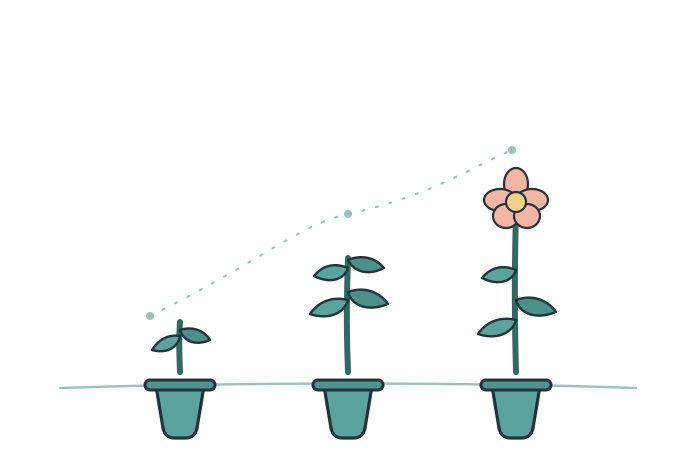
"How many sessions will I need?" is one of the most common questions before starting therapy. The honest answer is "it depends" — but behind that "it depends" there's actually solid research. Let's look at what the data shows, instead of vague reassurance.
The short answer
Many people notice real change within the first couple of months of weekly sessions. In a classic study by Howard and colleagues, about half of people felt a meaningful improvement by around the 8th session, and roughly 75% by the 26th. The American Psychological Association reports similar figures: on average, 15–20 sessions for half of people to recover on symptom measures.
Why there's no single number
Therapy isn't a fixed course of antibiotics. The number of sessions depends on a few things:
- the nature of the issue — a one-off difficulty or a long-standing, deep-rooted one;
- how severe it is and how long it's been there;
- your goals — easing acute stress versus understanding deeper causes;
- how well the specialist and their approach fit you.
What the research shows
Two models help make sense of it. The first is the dose-effect: more sessions bring more improvement, but with diminishing returns — the biggest shifts happen early. The second is the "good-enough level": in practice, people wrap up therapy once they feel "good enough." Some reach that point faster, some slower — and that's normal.
Rough guides
Not promises, just average ranges:
- A specific, focused issue (a fear, a particular decision, adjusting to a life event) — often a handful of sessions, roughly up to 8–12.
- Anxiety and depression — usually around 12–20 sessions. UK clinical guidelines from NICE, for example, suggest a course of 16–20 CBT sessions.
- Deep, chronic difficulties, trauma, long-standing patterns — from several months to a year or more.
How to tell it's working
You don't have to wait for the "finish line." Good signs show up earlier: you feel heard, it gets a little easier to put things into words, you start to understand what's going on with you. A reasonable rule of thumb: after the first few sessions you should feel some connection and a sense of direction. If you don't, it's worth saying so directly — or considering a different specialist. And remember: progress isn't linear; some sessions feel hard, and that's part of the work.
The best way to find your number is to talk it through with your psychologist — a good one will set rough expectations early and check in on progress with you. On Nəoldu you can start, get to know a specialist by chat, and simply feel out whether the path fits. Because the goal was never a number of sessions — it's feeling better, and staying that way.